Archive

Archive for the ‘Ramblings’ Category

Highway friendship

June 19th, 2024 Comments off

Sean and I were an hour east of Avoca, Iowa near Des Moines when it became apparent that we would not make it to Cedar Rapids on our extant tank of fuel. I was driving; it was Sean’s truck, and our F1000  race car was in our 24ft trailer behind us.

We were towing to Road America, a trip we’ve done many times, and we really wanted to make our next stop at a particular Kwik Star truck stop on US-151. (They had genuinely good food.) The distance to that Kwik Star: 102 miles. The estimated range per the truck’s computer: 100 miles.

We needed a draft to make it.

The key to a good draft is that you initially need to go just a little faster than your target speed so that you can come up upon a draftee that’s meeting that target on the nose. I considered a few prospect semis, but they were all going too slow. A few more miles ticked by. Then we came upon a blue tractor with an unassuming off-white trailer. Haz-mat, per his placards, “1906” and “1760” – cleaning solutions.

I hopped into his dirty air at a respectful yet efficient distance and instantly saw our mileage rise. He maintained speed with what seemed like cruise control; I modulated to hold station with my right foot.

As with many budding relationships, things soon got a little rocky. Truckers generally don’t like being drafted, especially by non-semis. When the two of our vehicles came up behind a slow-moving truck a few minutes in, my draftee merged into the left lane not far ahead of a passenger car, preventing me from following. He then slowed way down, giving me plenty of room to go in front of him and onward. I chose to stay behind the truck in the right lane, betting that my target wouldn’t like going so slowly for very long. Indeed, he sped back up to his previous pace, and I maneuvered back to my place behind him.

Things might have stayed somewhat strained, but for two truths: first, we came upon more traffic a few miles later, and second, my draftee was courteously aggressive about staying in the right lane except for passing. Of course, the problem with being courteously aggressive about staying in the right lane is that it’s easy to be screwed by traffic in the left lane when someone ahead is driving slowly in the right.

An opportunity presented itself when my draftee changed to the left lane for a pass, I followed, and he returned to the right after completing the pass. I, however, stayed in the left lane, as I could see he would very soon come up behind slow-moving traffic in the right lane. I could also see several cars behind me waiting to pounce. So, to the minor detriment of the cars behind me, I matched his speed but in the left lane, staying slightly back from his rear door. “I’m going to play some 2D chess,” I told Sean. I’d meant “3D chess”.

Sure enough, a minute or two later, he came up on the traffic in the right lane, and I slowed slightly more so as to make a big, obvious gap for him to come back left. Not wanting to be too pushy, I deliberately chose not to flash my lights in signal. He hesitated a moment, then politely merged back left in front of me, and promptly gave me the “hazard light blink”.

“Oh good, we’re friends again!” I told Sean.

And so it went. I’d draft him, then when we came up on traffic, I’d go left and block for him so he could move over without slowing down. He’d go over, give me a couple hazard blinks, and then we’d make the pass together.

This continued along I-80 for over an hour, then onto I-380 towards Cedar Rapids.

I almost dropped the ball on I-380 with a nearly missed block. When I realized the window was closing, I might have been slightly aggressive about moving over to, let’s be honest, cut off a car that was steaming up the outside. “Sorry!” I thought to the car now behind me — hey, I had to protect my friend.

When we got within a few miles of the US-151 turnoff from I-380, I slowed well-down, stayed right, and my semi friend went ahead in the left lane. He gave one more set of hazard blinks in goodbye, and traffic soon blocked my view of him.

I thought that was then end of it, but no! Like the awkwardness of discovering you’ve parked in the same direction as an acquaintance after already completing your goodbyes, it turned out that he too was following US-151, and we came up behind him again on the ramp. I wasn’t sure what to do; I didn’t want to be weird about it.

When we both made yet another turn to continue along US-151, I figured, “Eh, why not?” and we fell back into old patterns.

Thanks to the draft, our mileage in Sean’s truck had improved from 6.2 mpg to 7.5 mpg, and our target Kwik Star came into view with an estimated 35 miles of range left.

Sean and I had shared the previous four turns with our big-rig friend, but not our fifth: at the light for the Kwik Star, he stopped in the rightmost straight-through lane, and we slid into the right-turn-only lane.

As we came up alongside his rig, I slowed more than was needed and looked to my left at his cab with a smile and a wave. Inside, I could see his head turned back at me, a wave on his hand as well. He gave a couple quick toots of his horn in salute, and as his light turned green as we turned right.

Our highway friend lumbered off into the distance; we will never see him again.

Total solar eclipse, number two

April 9th, 2024 Comments off

For the second time in my life, I have been privileged to view a total solar eclipse.

With the weather forecasts favoring roughly Illinois in the week or so prior to the eclipse, but with considerable uncertainty still in the cards, Sean and I chose to drive to St. Louis from Denver so that we’d be well-staged for a last-minute location decision. The bartender at our hotel on the west side of town enthusiastically promoted southeastern Missouri as an option; the morning of eclipse day, the final model runs favored that approach. Thus, we headed to just northwest of Poplar Bluff, Missouri, exactly on the line of maximum totality duration.

We set up shop about three hours before the show at a prime location just off the road, flanked on both sides by an increasing number of fellow eager eclipse watchers. Our telescope, which saw its last meaningful use seven years earlier at the previous total eclipse, once again was assembled, aligned, and outfitted with a solar filter cap.

The temperature was very pleasant. Wispy cirrus clouds caused some concern early but blew out after a couple hours. The weather, which had been the source of so much worry and uncertainty, was absolutely perfect.

We talked with our neighbors — young kids, old retirees, middle-agers aplenty — and shared views through our telescope. All were excited about what they were about to see. Many had seen the 2017 total eclipse, which had also passed nearby, and that experience had left them yearning for another hit. I have yet to meet anyone, anywhere, ever, who has actually seen a total eclipse and had anything other than the most superlative praise for the sight.

In due time, the partial eclipse began. We watched the progression through the telescope. One by one, the several sunspots on our star fell out of view as the disc of our moon traveled along. A digital light meter that we brought told the same story in numerical terms, with 130,000 lux falling steadily to 65,000, 30,000, and lower. The world became noticeably dim. The wind, which had been light and warm, shifted around and became cool.

At about 95% obscuration, birds and inspects began singing, instinctually convinced it must be nearly nightfall. I had obviously heard stories about such things, and surely the same must have happened in Wyoming in 2017, but it seems I had forgotten the first-hand experience of it.

The sliver of the sun shrank more and more, then suddenly: totality! All around the horizon was sunset.

Flanked by Jupiter and Venus, the brilliant white silken fingers of the corona surrounded the impossibly black perfect circle of the moon. People cheered, clapped, and wept. I know I couldn’t help but get teary-eyed and choked up; it was just so profoundly beautiful and moving.

The darkness of the black spot of the moon is at once both the most anticipated and least expected feature of the experience. The rest of the sky is a very deep navy blue, but that spot; well, it’s just impossibly black. Even knowing the math and physics of it, I found myself connecting across time to the unknowing ancients who must have puzzled over the sight. The sun was there, then suddenly it wasn’t there. The brightest thing in our existence became the darkest thing imaginable, all in a moment.

Through the telescope, the solar filter now removed, the texture of the corona became almost palpable, and the several prominences which were just barely visible to the naked eye became astonishing twists of red ribbon.

As with the previous eclipse, I deliberately chose not to photograph it. Totality is fleetingly short, there will be plenty of photos from other people, and in any case even the very best photos and videos don’t come anywhere even remotely near to doing the experience justice.

Four minutes and eleven seconds after it disappeared, the sun began its return. Like an LED projector headlight in the distance, a bright pinpoint of light emerged and cast shadows like a full moon. Rapidly, color and warmth returned to the world. Sean remarked that it was like somebody was bringing up the house lights in a theater.

A moment passed; several people clapped and cheered. All of us gathered were in smiles, the unanimous agreement being that the natural show had been top-notch. Whatever expenses had been incurred in time or money had been worth it.

With that gravitas out of the way, we quickly chucked the telescope in the truck and sped off to beat the traffic. If everyone else hadn’t had the same idea, it might have worked, but fortunately, with the aid of old-school map reading and four-wheel drive, we were able to route around the worst of it and make it back to Denver about 15 hours later.

The Indy 500

May 20th, 2020 Comments off

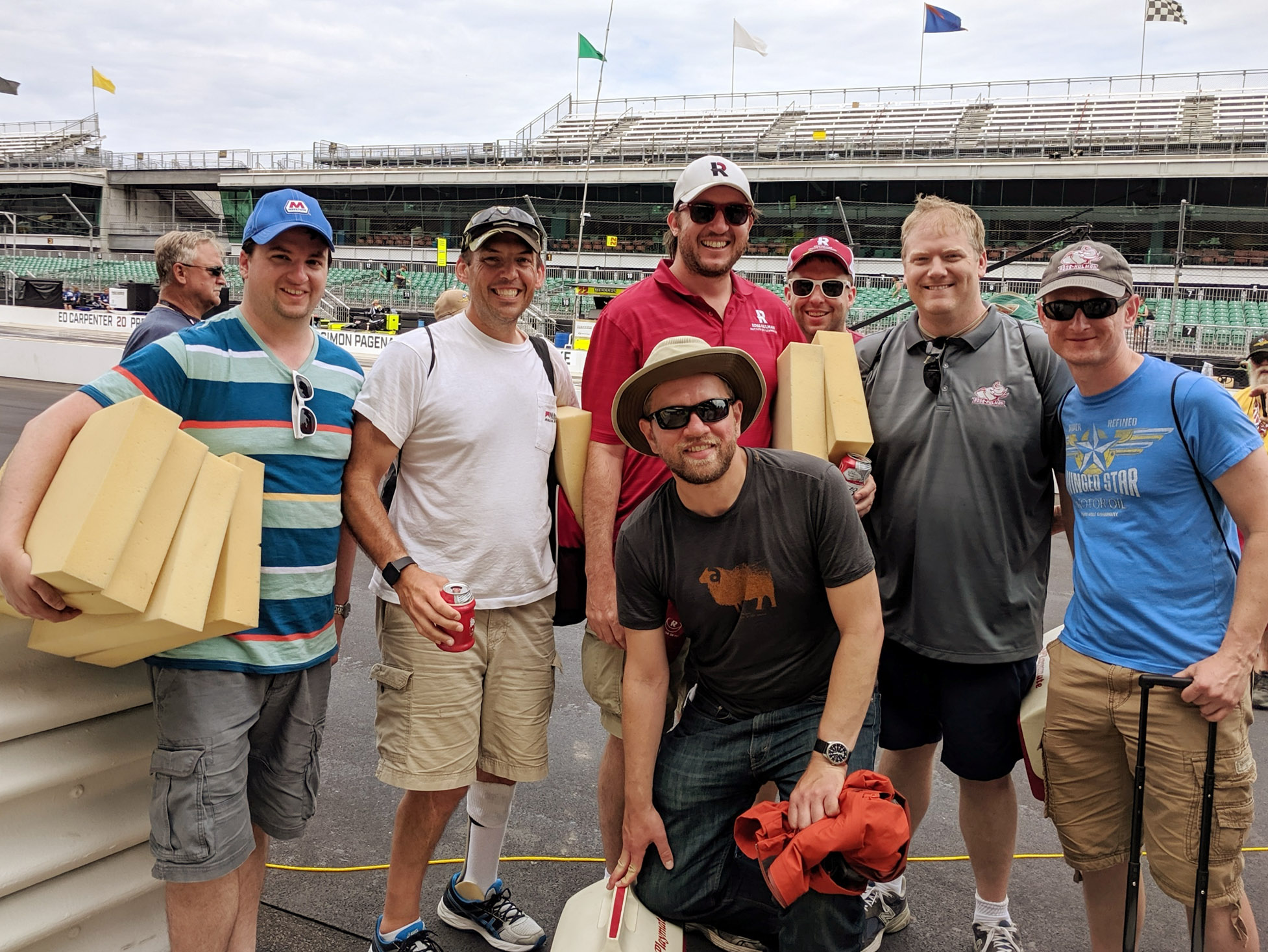
It was 7:30 a.m. on the Sunday before Memorial Day 2019, and I just couldn’t start drinking again quite yet; my companions were undeterred by the hour. The seven of us were sitting on lawn chairs in some friend-of-a-friend’s yard a few blocks from the Indianapolis Motor Speedway, and the makings of screwdrivers were being passed around.

Events had been placed in motion the quiet Tuesday just a few days prior. I’d received a telephone call out of the blue from my fraternity brother Jared. “Do you want to go to the Indy 500 this weekend?” I hadn’t recognized the number, so I was caught unprepared for an invitation into such hedonism. “Why, yes of course!” I said, scrambling to fill in the gaping logistical holes that resulted.

But my credit being good enough, both in a material and interpersonal sense, the path was smoothed, and thus I found myself on a jet inbound to Indianapolis the evening before the race.

On approach for landing, we passed alongside the Speedway. Lit by the golden light of the waning sun, but otherwise idle, the view only hinted at the spectacle that would soon be upon it.

My view of Indianapolis Motor Speedway from my flight

My view of Indianapolis Motor Speedway as we were landing

I deplaned with a small knapsack into the belly of the airport. Everywhere I turned, the theme was racing, and heavy on it. Checkered flags galore; Indy car memorabilia; actual Indy cars; and shells of Indy cars for more acceptable flouting of “no touching” signs. You could have a burger at the 500 Grill or grab a magazine about the race at the Pitstop Market. Bits of racing chatter hit my ears as I made my way through. “Pagenaud was looking fast.” “Did you see Herta made the second row?” “What an embarrassment for Alonso and McLaren.” “They’re saying rain.”

Clearly, Indianapolis had hitched its cart to the Cult of Open Wheels, at least for the month of May.

I burst into the humid midwestern air right about the time Jared rolled up in his BMW convertible, top down. In the car already were two more of my fraternity Brothers, Ryan and Chris. I hadn’t seen them or Jared in person in almost a decade. Could it really have been so long? We all looked a bit different, worn by time, and yet we picked up right where we left things those many years ago.

I jumped in the back and we zoomed off into the verdant suburbia northwest of Indianapolis.

At Jared’s house, four more of my Brothers greeted me. I hadn’t seen George, Kevin, Kyle, or Phil in forever either. Wives and numerous children rounded out the coterie.  Jared had a keg of excellent homebrew beer on tap — civilized! — and as we all partook we caught up with one another on the highs and lows of the recent past.

And more beer, and laughing, and more talking, and more beer, and karaoke, and talking and beer an tlakng andd beeer and… suddenly it was 1:30 a.m., and we’d need to be up in a few hours, and, and… and…

Morning, too soon. But there was a coffee pot, and it was functional.

The cooler was packed with amazingly delicious sandwiches, snacks, and a layer of beer in cans below. I thought we were being clever about the beer, but no: you can bring pretty much whatever you like into the Speedway as long as it isn’t glass.

Which brings us back to the dawn screwdrivers in the yard. We chatted with the homeowner, sharing predictions about the race and gossip about the drivers and teams.

After our supply of orange juice and vodka had been exhausted, we made our way to the track past numerous other boisterous groups still in the midst of tailgating. Above us, clouds.

Rain loomed, the forecast chance being 100%. Unlike Formula 1, or even unlike road courses in IndyCar, oval races are done only in the dry. If it rained, we’d be at least delayed if not postponed. I had to fly back to Denver that evening regardless.

Drastic measures were warranted. I figured I’d guarantee that it wouldn’t rain by wearing my raincoat.

Ten o’clock, and we were past the IMS gates. I’d never seen such a cursory, useless security check of what we brought with us, not even at the airport. The “no glass” rule was effectively on the honor system. It was a heartwarming show of trust in our common decency, something far too uncommon nowadays.

We had a couple hours until the worthwhile festivities started on the track-proper, and our alma mater Rose-Hulman was handing out snacks and good beer at a pop-up tent. I was expecting the hard sell about how much they needed alumni donations, but no. Perhaps the beer would become much more expensive later if one were to avail themselves of it too often?

The sun did battle with the clouds; the humidity crept higher. The trees around the perimeter of the track grounds were lush thanks to the moisture of Indiana, but that moisture was the enemy for the day. Still, nothing had condensed, at least not yet.

We made our way to our seats.

It was time for the pre-race pageantry: the endless presentation of people of dubious notability; the delightful antique race cars that sorta-kinda still worked, belching alarming amounts of oil smoke (or were they diesels?) as they puttered parade laps around the 2.5 mile circuit; the people along the wooden benches in the grandstands who were improbably already hammered; and — this was really cool — the fly-over by an A-10 and an F-16. The former made multiple low laps around the oval, while the latter made a dramatic exit by doing a “quick climb” at the middle of the track, pulling from level to straight up, driving to the clouds.

Crews inserted starters; starters cranked engines; and 33 engines began singing the high-speed motorbike-like idle of racing.

The field fell into formation laps as the quarter-million of us in attendance stood on our feet in anticipation, and then…

Green! Green! Green!

The engines roared! The race was underway!

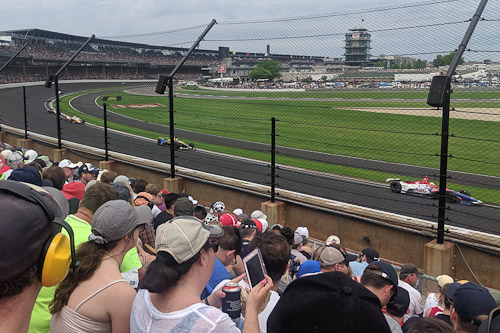
View from our seats at the exit of turn 1 at the Indy 500

View from our seats at the exit of turn 1 at the Indy 500

Every 40 seconds, the field screamed past us. We were ten rows up from trackside in the exit of Turn 1; the sound would have been deafening without earplugs. You could feel the pulsing of the engines even from that distance.

I was astonished how fast the cars were moving. Despite spending my four undergraduate years living in Indiana, I’d never been to the 500, and the racing I’d done the previous weekend in my Formula Vee was, at most, far less than half the speed I was now seeing. The cars were moving so fast in front of us that it was impossible to track them with a turn of the neck or a flick of the eye. It was nothing I’d ever experienced.

“Who’s your man?” I was asked. “Herta!” I replied, cheering on the young rookie. Four laps into the race, Herta’s gearbox expired, and he was out. I decided it was time for a drink.

The space below the grandstands was not one for lingering. A continuous light drizzle of booze — I hope it was booze — drifted down from the increasingly inebriated throngs on the benches above. Lines were long at the concessions for your choice of beer, hot dogs, pretzels… and not much else. The physical plant, especially in the corroding bathrooms, seemed straight out of the 1940s.

And yet, it was not cheap. Ticket prices were in the triple digits, and those hot dogs were similarly dear. You needed to be reasonably well off to be so lucky as to be low-brow for a day.

It was in many ways as though the decadence and depravity of the Kentucky Derby had migrated a hundred miles north in the weeks between that horse race and this horseless race. Perhaps it was once, like many things, an indulgence of the blue-collared, but now it seemed a fling for the well-to-do as much as anything else.

The race continued. The field settled into a rhythm, grinding out green-flag laps. The rain never came, which was good, but there wasn’t much passing (or crashing), which was a little boring. For the most part, the machines held together. And so it went for the next couple of hours.

But then, drama!

Two cars got into it in Turn 3, which led to three more being collected. The race was halted temporarily, and when the restart came, the 500 had turned from a button-down enduro into a lively 14-lap sprint! There was passing galore, there was close racing, and in the end, Pagenaud prevailed by an incredibly short 200 milliseconds. A wonderful finish! A fun day.

We went directly to the airport, where I bid farewell to my friends, and, once on the airplane, I promptly fell asleep.

Mechanical watch

November 16th, 2019 Comments off

Do you wear a watch? The answer is probably no, but if you do, you’re probably of an, ahem, more experienced generation, or your watch has the computing power of a 2010-era iPhone. However, I wear a watch, I’m a millennial, and my watch has zero ability to do any sort of computations.

I love my mechanical watch.

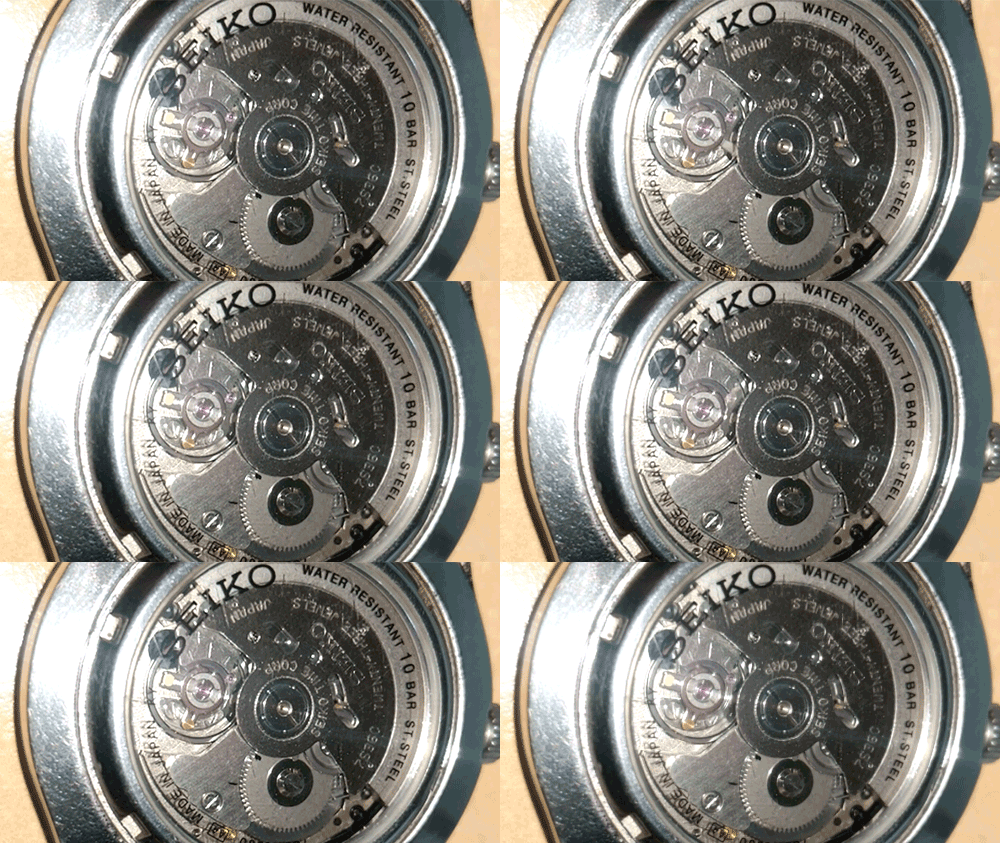
The beating heart of my Seiko 5 Sports mechanical watch.

The beating heart of my mechanical watch. Also the first animated GIF I’ve ever had on this blog.

Every once in a great while I encounter somebody else with a mechanical watch. For those in the know, it’s possible to immediately identify such watches, so long as they have a second hand. Whereas quartz watches have a second hand that ticks once per second — tick….tick…tick… — mechanical watches beat at least four times per second — ticktickticktickticktick — so the second hand assumes a smooth “sweep” motion from afar. There are exceptions, notably the tuning-fork-driven Accutron, but if you see a real, working Accutron on somebody’s wrist, ask the person about it, because I can guarantee it will make their day.

Mechanical watches are, in every objective sense, terrible timepieces. They stop if you don’t wear them for a few days, they’re nowhere near as accurate as quartz watches even if you do wear them religiously, they require periodic maintenance, and they’ll break if you subject them to even moderate physical insult. So why bother? Because they’re amazing.

They are purely mechanical systems, reliant only on Newtonian physics, that can do something remarkable: keep time, and (usually) recharge themselves. You can the movement doing its thing through the skeleton back present on many mechanical watches, so there is no mystery to it — except for how the designers came up with the ideas, how the machinists/robots produced such precise parts, and, for automatic watches at least, how the whole thing manages to run solely on the tiny bit of energy harvested from the mundane routine movement of one’s arm. It’s all observable, it’s all knowable, and yet it’s magical.

Many high-end watches are still mechanical. Brands like Rolex, TAG Heuer, Breitling, and others more expensive and obscure feature purely mechanical movements as options if not defaults in their pieces. I, on the other hand, have worn a simple Seiko 5 Sports automatic since 2015. It’s not as fancy as the watch it replaced — the crystal is some sort of glass instead of sapphire, the body is stainless steel instead of titanium, and so on — but unlike that other watch, it’s mechanical! My Seiko has been reliable, but it’s cheap enough that if I were to break it I’d simply get a new one. I’ve seen another person wearing a Seiko 5 Sports only once, at an automobile race track several years ago. We exchanged knowing acknowledgements.

Even today, I’ll sometimes take the watch off my wrist and put it next to my ear, just to listen to the “tickticktick” of the balance wheel at the heart of the movement. I’ll flip it over and watch its rhythmic motion beat away the moments. And then I’ll return it to my arm and employ it in its utilitarian raison d’être, using it as my go-to source of time and date information. Some pull out their phones all the time; I save time by telling it from my mechanical wristwatch.

Are all alkaline battery brands the same?

December 22nd, 2018 2 comments

I’d often wondered whether there really were any differences among the major AA and AAA alkaline battery brands. Sure, Duracell and Energizer both put out numerous ads claiming to have the best battery life, but I figured that was nothing but boisterous marketing. Surely they must be about the same, right?

How wrong I was. You can indeed buy a bad brand-name battery. But I’m getting ahead of myself.

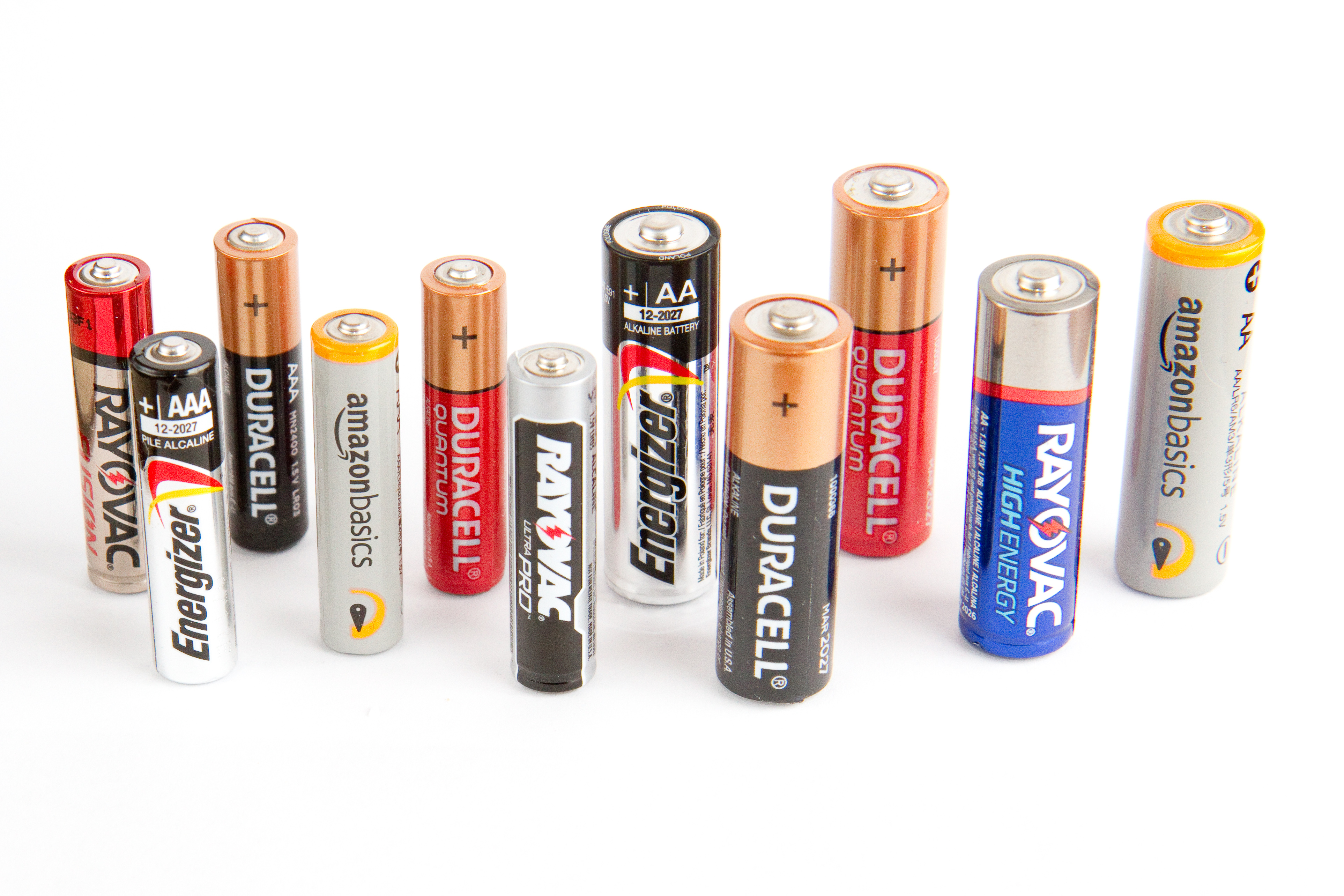
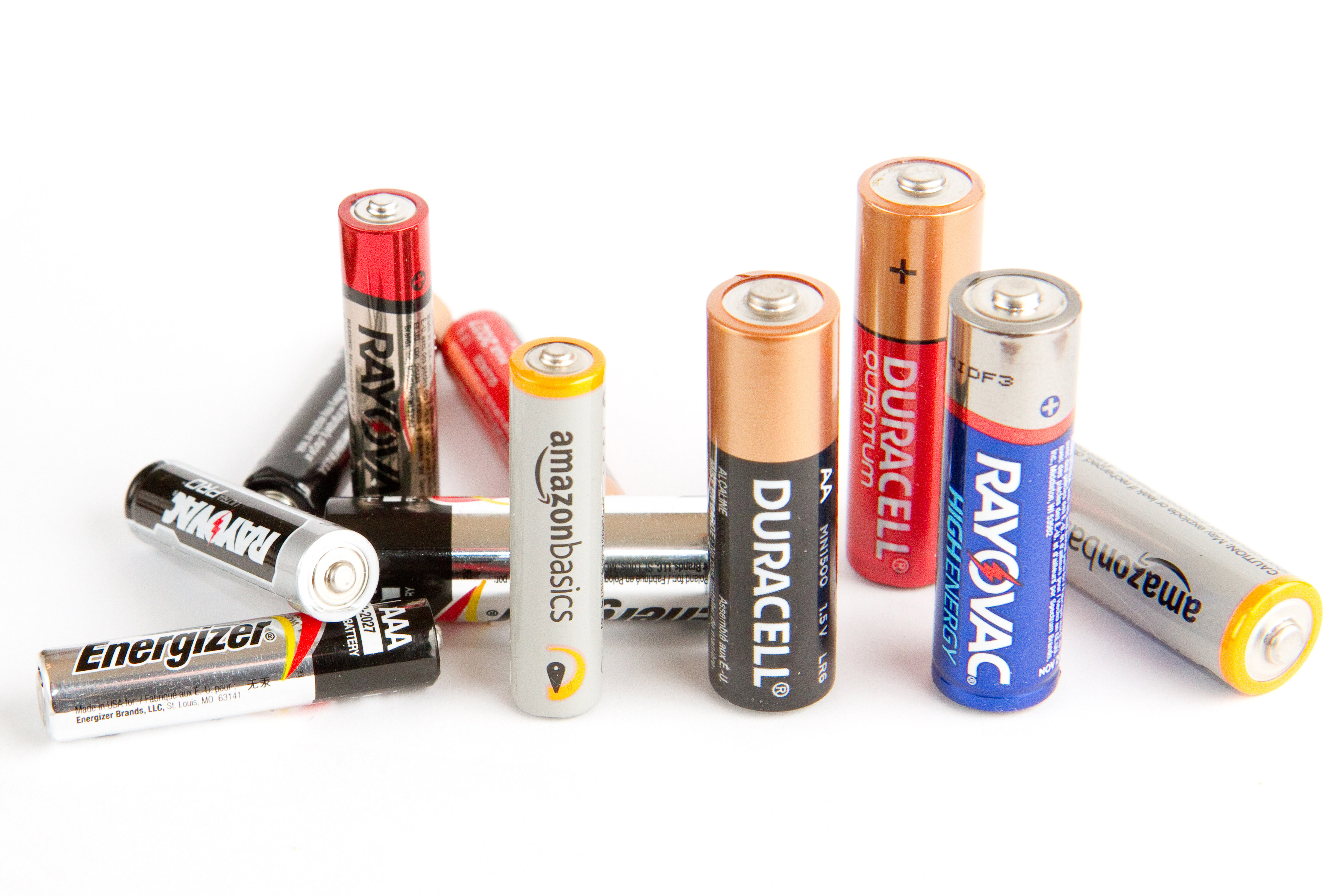
Most of the batteries tested in this post

To answer the question, I decided to measure the actual usable capacity of AA and AAA alkaline batteries from the major brands under conditions simulating light to heavy loads. I wanted a rigorous, repeatable experimental setup, so I used an Itech 8511A+ programmable DC load on my lab bench to drain the batteries under precisely controlled constant-current conditions and recorded the data points on a PC. Each battery was in a properly sized battery holder, and it was connected to the load with a 4-wire setup.

Lest anybody claim I’m in the pocket of Big Battery, I bought all of the batteries I tested at retail, and I took no money from anybody.

I will admit that the testing scope kind of snowballed out of control and as a result took a lot longer than expected. I could test only one battery at a time, and when light loads met high capacities, it would take several days to complete a single test (of three) for each battery.

Fortunately, it turned out that a lot of batteries were crap, so some tests went unexpectedly quickly.

AA battery results

Energizer, Duracell, Amazon Basics, and Rayovac were the contenders in the alkaline AA ring, with two Duracell sub-brands represented (Copper Top and Quantum) and four Energizer manufacturing locations in the field (Poland, Indonesia, China, and the USA).

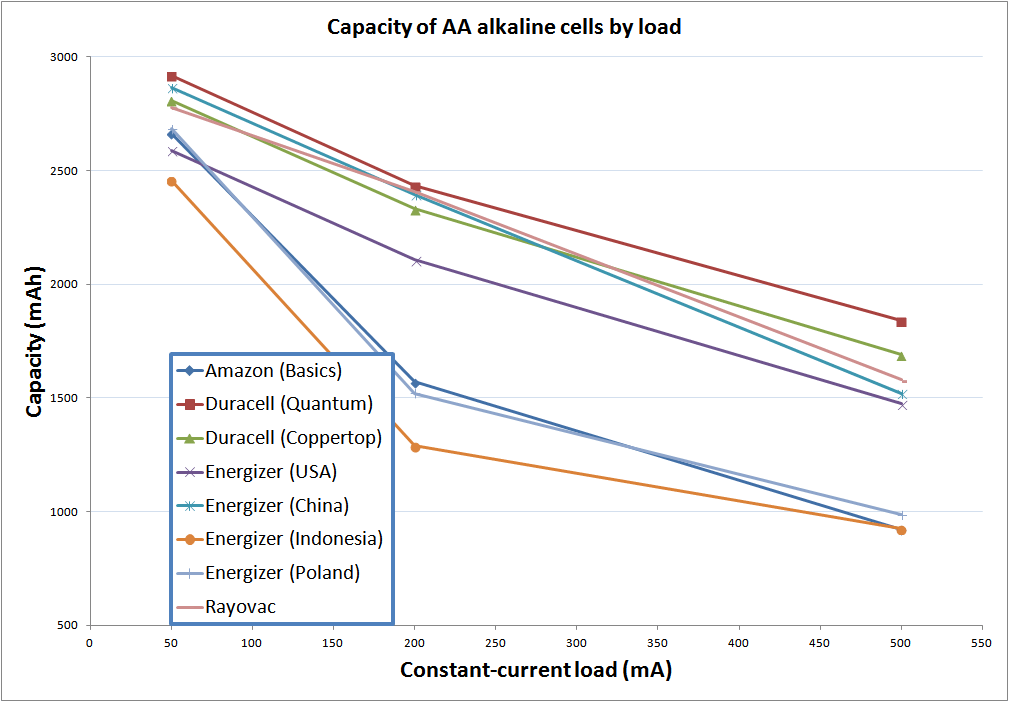
Round one? A light load, specifically 50 mA. While that level is still well above what you’d see in a very light load like a wall clock or a garden watering timer, it turns out that all of the batteries were pretty much the same there: 2700 mAh +/- 10%.

Why not test even lighter loads? Time constraints. The capacity in milliamp hours (mAh) is the number of hours of run time multiplied by the load in milliamps. That works the other way, too, so you can find how long a test took by taking the capacity in mAh and dividing by the current in mA, giving hours. A 2700 mAh battery at 50 mA already takes over two days (54 hours) to test; testing at 10 mA would take about a week and a half. I didn’t have that kind of time or patience, but somebody else did.

As the load was stepped up to 200 mA, which you might see with a flashlight on “low”, some differences among the brands emerged!

With a 200 mA load, there was more than a factor of two difference between the worst performer (the Energizer Max AA manufactured in Indonesia) and the best performer (a Duracell Quantum). The Coppertop Duracell sub-brand was near the top, as was the Rayovac, while the Amazon Basics options had middling performance not far ahead of the worst Energizers.

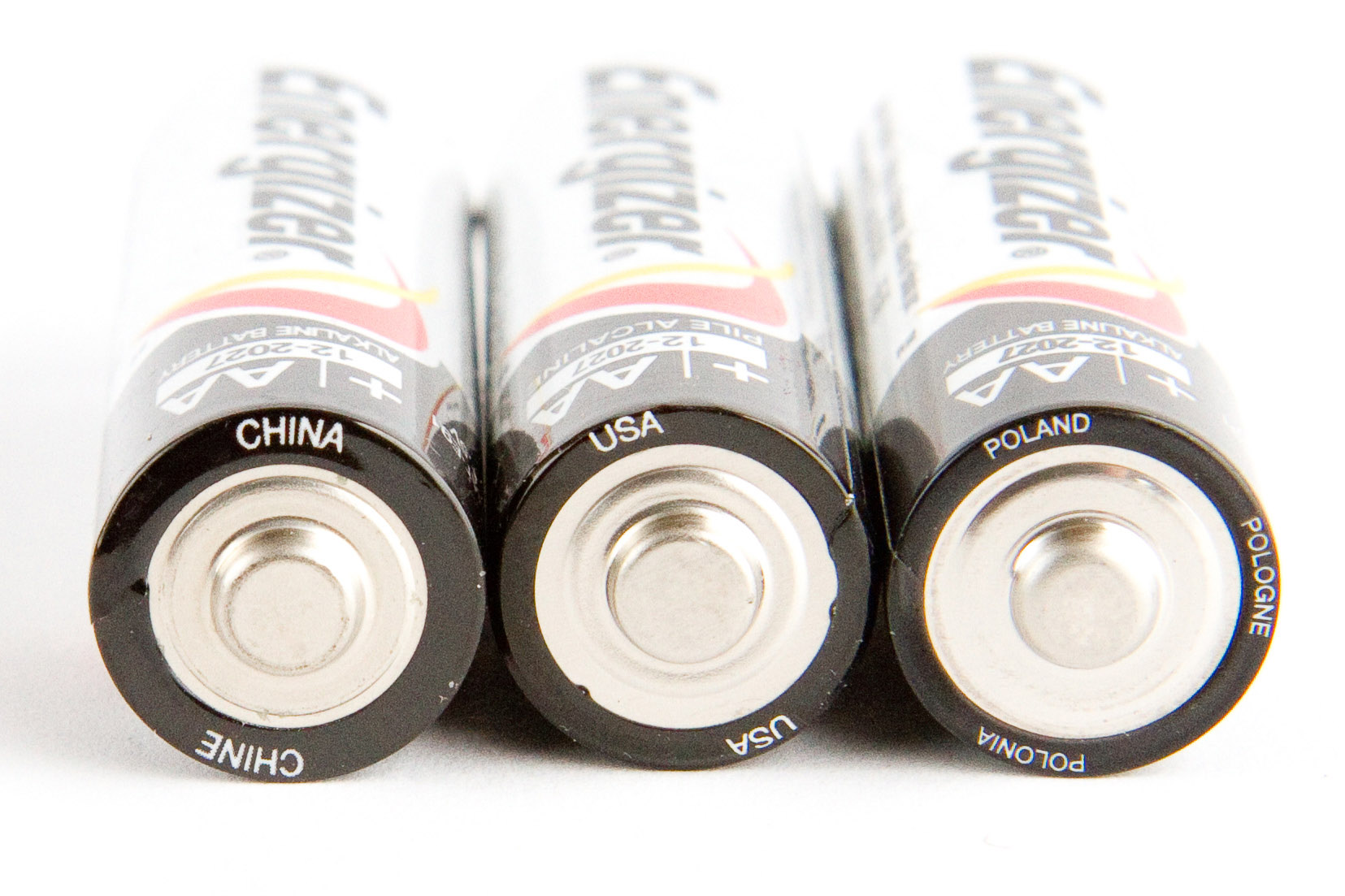
Oddly, the performance of the Energizer batteries was very strongly tied to the manufacturing location. The Energizer batteries made in China performed pretty well — right up there with the Duracells and Rayovac. However, the Energizer batteries made in Indonesia and Poland were terrible. The Energizers made in the USA were pretty good but not great, sitting somewhat back from their Chinese brethren.

Not all Energizer AA alkaline batteries are made in the same place, and the quality can differ according to the manufacturing location. The place of origin can be found on the positive side of the battery.

Not all Energizer AA alkaline batteries are made in the same place, and the quality can differ according to the manufacturing location. The place of origin can be found on the positive side of the battery.

The same trends held at the 500 mA level, similar to a reasonably bright LED flashlight. The Amazon cells and the Indonesian and Polish Energizer cells occupied the rear again, with only about half the capacity of the Duracells and Rayovac, which were again in the lead. The American and Chinese Energizers rounded out the front group, about 15% off of the best performer, the Duracell Quantum.

The capacity data for the various batteries, in mAh capacity versus mA drain (click to enlarge)

The capacity data for the various AA batteries, in mAh capacity versus mA drain (click to enlarge)

The take-aways from the AA tests:

  1. Duracell is a safe choice for AA alkalines
  2. There isn’t much of a difference between Duracell Quantum and Duracell Coppertop
  3. Avoid Amazon Basics AAs
  4. If you buy Energizer AAs, check the top of the cell (by the positive terminal) to make sure they weren’t made in Indonesia or Poland

Half-time assessment

The Energizer bunny sure has a good side and a bad side, at least based on the AA tests. Energizer fanboys aren’t going to be happy.

On the other hand, Duracell partisans are probably feeling pretty smug. The Copper Top (and Quantum) cells were consistently great in the AA tests.

Other than the Energizer results, the big surprise for me was how poorly the Amazon Basics cells fared. Since those are also made in Indonesia, and since certain tell-tales on them look very similar to the Indonesian Energizers (but not the other Energizers), I can’t help but wonder if perhaps both Amazon and Energizer sourced some AA batteries from the same OEM in Indonesia. Just speculation, nothing more.

On to the smaller batteries. Would the same relative brand results hold? Spoiler: no.

AAA batteries

I did a limited test of cheap alkaline AAA batteries last year, but this time around I looked at the brand name offerings. Alkaline AAAs from Duracell (Coppertop and Quantum), Energizer, Rayovac (Fusion and normal), and Amazon Basics were in the running. All of the Energizer AAAs I found were made in the USA, unlike with the AAs.

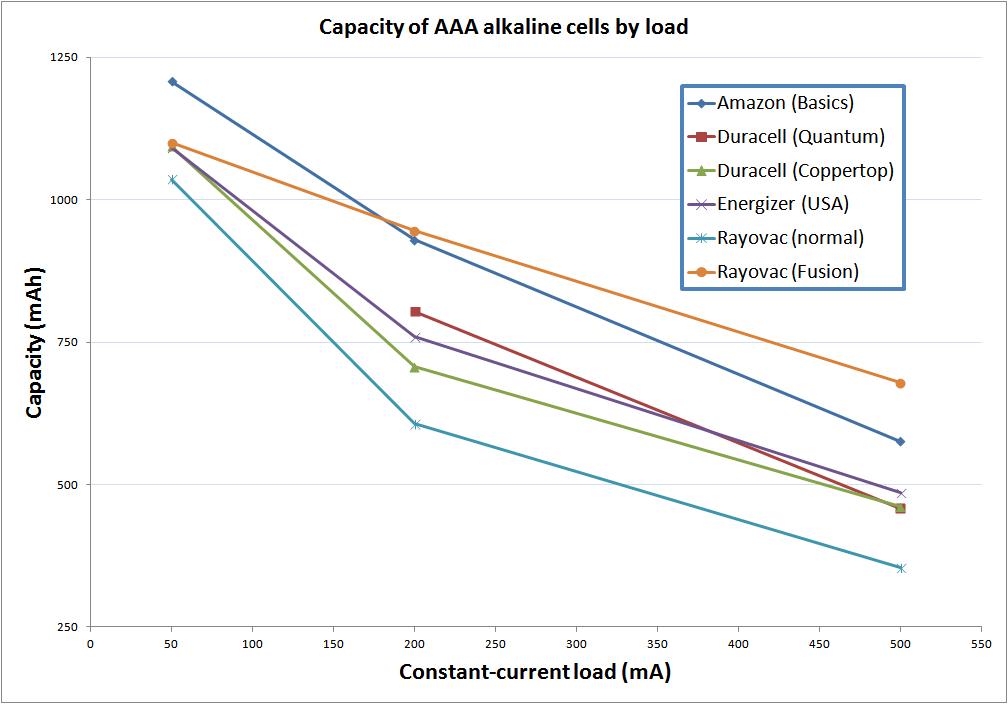
At the 50 mA level, which would provide data that would be useful for selecting the cells for your TV remote, even the worst performer was only 15% back from the best performer. Thus, for light-load applications, just get whichever of them is cheapest and don’t worry too much about it.

Things got more interesting at the higher drain currents, which would be relevant for things like LED headlamps, flashlights, or radios.

The best and worst options at 200 mA were both made by Rayovac: the normal alkaline Rayovac was the worst, but the Rayovac Fusion was the best. Close behind the Rayovac Fusion was the Amazon Basics AAA. Energizer and Duracell were mid-pack and about even with each other.

At the highest drain level, 500 mA, the Rayovac Fusion option blew away the competition, while the normal alkaline Rayovac was dead last. I mean, dead first. I mean… it had by far the lowest usable capacity, only about 50% of that of the Fusion sub-brand. The Amazon Basics option was pretty good, and the Duracell and Energizer entrants were both closer to last place than to the front-runner.

In other words, the AAA results were entirely different than the AA results. Just because a manufacturer can make a good AA battery doesn’t mean they can make a good AAA battery, and vice-versa. Or, in the case of Rayovac, they clearly know know to make a good AAA battery but choose not to apply that knowledge uniformly across their product lines.

The capacity data for the various AAA batteries, in mAh capacity versus mA drain (click to enlarge)

The capacity data for the various AAA batteries, in mAh capacity versus mA drain (click to enlarge)

The take-aways from the AAA test:

  1. Duracell and Energizer are about even in AAA land, but neither are particularly good
  2. Amazon has a decent AAA battery even though they’re bad at AA batteries
  3. Rayovac Fusion alkaline AAA batteries are really good at high loads, but the normal Rayovac alkaline AAAs are terrible
  4. For light loads, everybody is about equal. The only real differences are at higher loads

Conclusion

Duracell was consistently decent, though not always the best. Energizer was surprisingly inconsistent based on the manufacturing location used for a particular lot. Rayovac was great for AAs, great for some AAAs, and terrible for some AAAs. Amazon’s “Basics” house brand was roughly the opposite: great for AAAs but pretty bad for AAs.

The aftermath

Now I need to figure out what to do with all of these terrible Polish and Indonesian Energizer AAs…