Archive for June, 2010

Car Number Six (of six)

Even though my Subaru had been great for me, I doubted its ability to transport me through to the completion of my pending round-the-continent trip.  I needed something newer.

The search process began with a wide survey of the options.  Would I be best served by a sports car?  An SUV?  A sedan?  How much space would I need?  How much power?  How new would be new enough?  What could I afford?  What would best fit my personality?

I decided that the trip would require ample cargo space, so that narrowed the field to SUVs and wagons.  (Sorry, minivans failed the personality test.)  I liked the romance of a true body-on-frame SUV, but more efficient use of space and superior gas mileage made the crossovers and wagons attractive, too.  Ignoring the fact that I don’t ever do any serious off-roading, I very nearly purchased a Toyota Land Cruiser, but that deal fell apart during negotiations.

After more research, test drives, and soul searching, I did what has got to be one of the stupidest financial transactions in the world.  It’s something that I’ve written and spoken against.  It’s something that I’d never done.  It’s something that I swore I’d never do.

I bought a new car.

The flat-6 engine is a thing of beauty.  The pistons in the opposed cylinders balance each other giving the machine incredible smoothness.  The horizontal (or “boxer”) configuration sits low in the engine bay, which endows the vehicle with a low center of gravity and thus superior stability.  The unusual shape also makes possible unusual drivetrain layouts, which allow the rise of vehicles with charisma.

Only two mass-market car companies currently manufacture flat-6 engines: Porsche and Subaru.  My Outback had a flat-4, so I had already experienced the Japanese take on the layout.  Porsche has been my favorite car company for a while now, so I gave them serious consideration, too — but their SUV, the Cayenne, did nothing to stir my passion, and a 911 would be totally impractical for the trip.  Subaru won.

Last Wednesday, I closed on a brand new dark red 2011 Subaru Outback 3.6R Limited.
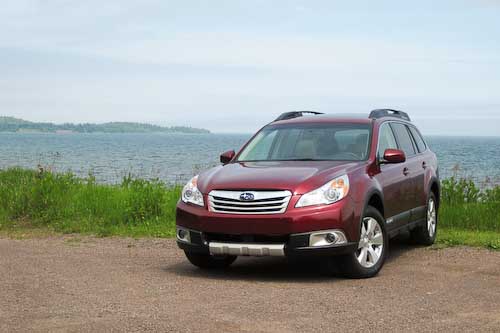
My 2011 Outback

My 2011 Outback

The 2011 model is very similar to the SUV-of-the-year 2010 model, a fact that I at first found a bit unsettling. I bemoaned the Outback’s transition from quirky wagon to mass-market crossover.  “Why?”  I asked the automobile gods.  To which they responded, “Drive it.”  So I did.

After that first test drive, I knew my car search was over.
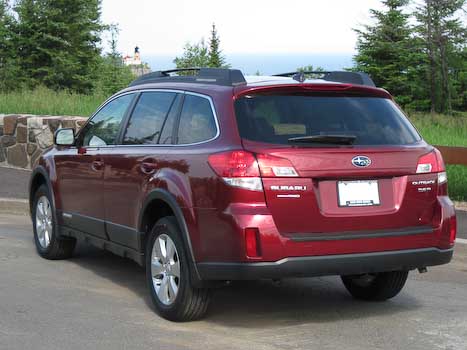
The Outback with Split Rock Lighthouse in the distance

The Outback with Split Rock Lighthouse in the distance

Roomy, powerful, capable, and comfortable: the Subaru had what I wanted.  The only thing I would have liked to have had was a manual transmission, but the 5-speed auto is a tolerable compromise.
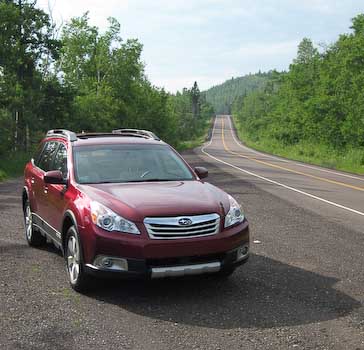
Near Finland, MN on MN-1

Near Finland, MN on MN-1

Mine is the top-of-the-line version, with the 6-cylinder boxer engine, leather interior, nav system, sunroof, and a host of electronic gizmos and mechanical whiz-bangs.  It took me a couple of weeks to find the right one after that first test drive, but I succeeded.
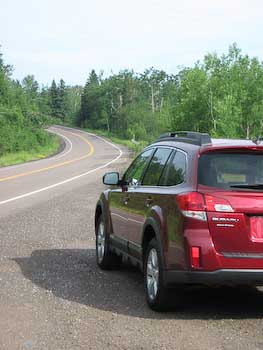
Also on MN-1

Also on MN-1

Will it be a good car for me?  I hope so.  It doesn’t have the cachet of the BMW in the public’s eye, but the Subaru nonetheless has a very devoted following.  It’s the right car for me for the time.

This new Outback is a substantial 13 model years newer than my old one, and it’s 11 years newer than the next-newest car that I’ve owned.  There has been incredible technical progress in the intervening decade, but the new Outback still reminds me of the old one.  It’s about the same size, just a few inches taller, wider, and longer.  It has a lot more power, which is nice, as well as a few more cubic feet of cargo room, but when I slip behind the wheel, I can tell that the two machines are brothers.  It’s Subaru magic.
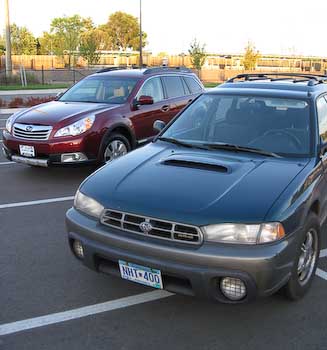
The 1998 Outback with the 2011 Outback

The 1998 Outback with the 2011 Outback

Stats

  • Dark red 2011 Subaru Outback 3.6R Limited
  • 3.6 L naturally aspirated flat-6
  • 5-speed automatic transmission
  • 256 hp / 247 lb-ft
  • Ivory leather interior
  • 34 miles when acquired (June 23, 2010)
  • 702 miles as of today (June 30, 2010)

Car Number Five (of six)

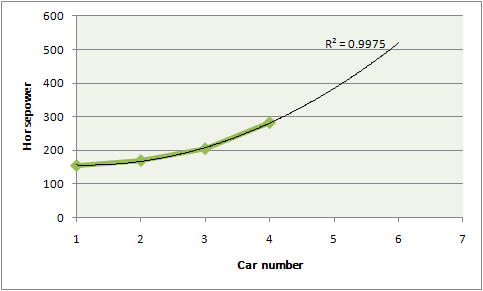
As you’ve been reading this series, you might have noticed a trend in my car selections.  As I moved from one car to the next, there was always a bump in horsepower.  Plotting the horsepower versus the car number makes a tidy chart.  It also shows how well a second-order polynomial can fit.

Horsepower versus the number of the car

Horsepower versus the number of the car

Based on the curve, one might expect my fifth car to have made nearly 400 hp.  Was it an M5? A Corvette?  A Ferrari?  No, it was better: a Subaru Outback.

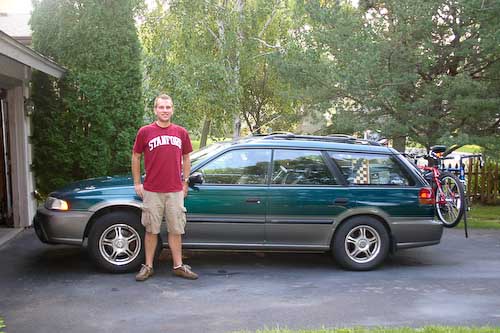
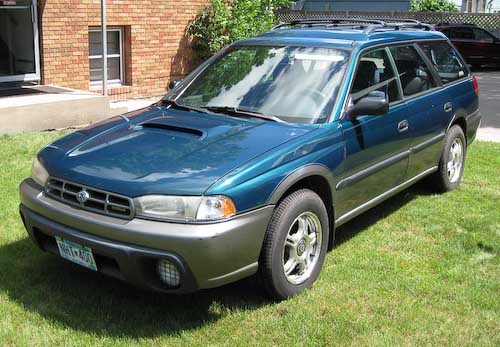
My 1998 Outback

My 1998 Outback

Coming to the table with a whopping 170 hp, the Subaru wrecked the trend, but what it lacked in power it made up for in utility. My 1998 Subaru Legacy Outback hauled anything and everything.  It was already pre-scratched, so it could be parked anywhere without worry.  On the rare occasions when it needed repair, parts were affordable.  It even got decent gas mileage.

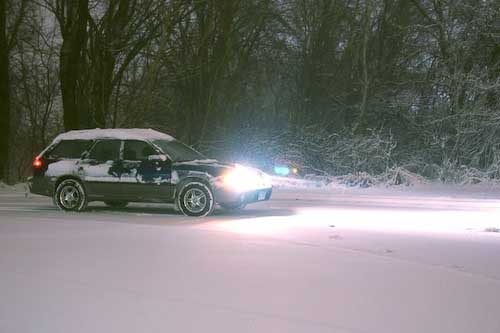
Snowy Outback

Snowy Outback

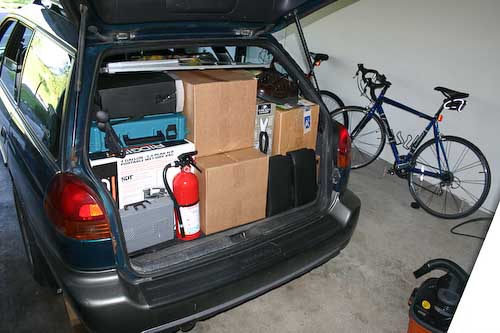
The Outback is the car that carried me and all of my worldly possessions between Minneapolis and Palo Alto.  It was severely overloaded, but it made the 2100-mile trip (twice!) with only one glitch. Deserts, plains, mountain ranges, heat, and cold; none of those things could stop it.

Loaded with everything I owned for the move to California

Loaded with everything I owned for the move to California

(it was a tight fit)

(it was a tight fit)

It’s funny how each car model draws a certain crowd.  The Bonnevilles drew the practicality-minded gearheads.  The BMW drew the “go fast through the twisties in style” enthusiasts.  The Subaru draws the outdoor adventure crowd.

I’ve quipped in the past that you know you’re at REI when the parking lot looks like a Subaru dealership.  Not only that, but most of those Subarus are full of mud, are plastered with outdoors-related stickers, and bear the occasional kayaks strapped to the roof racks.

I still have the Outback, but I am getting ready to sell it.  What could possibly take the place of such a dependable, affordable, useful car?  Stay tuned.

Stats

  • Dark green 1998 Subaru Legacy Outback Wagon
  • 2.5 L naturally aspirated flat-4
  • 4-speed automatic transmission
  • 165 hp / 166 lb-ft
  • 172,000 miles when acquired (ca. December 29, 2006)
  • 211,000 miles at present (June 29, 2010)


Car Number Four (of six)

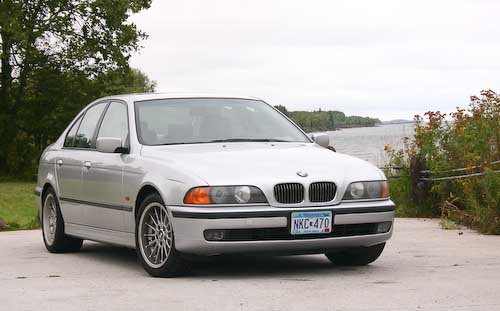
From what I can tell, my friends and family liked my BMW.  A lot.  I, too, have fond memories of it.  It is undoubtedly the most fun car that I’ve had.  It was the fastest, the most luxurious, the newest, and the most prestigious.  The problem was that all of those things came at a cost.

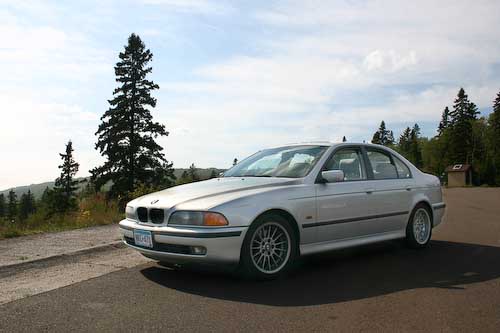
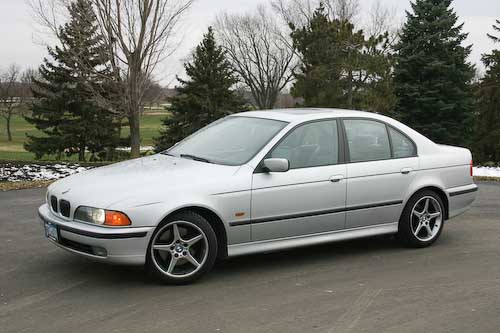
My 1999 BMW 540i

My 1999 BMW 540i

In truth, I began thinking about selling the BMW the spring after I acquired it.  Upkeep was horrendously expensive in terms of both money and time.  I found myself worrying about where to park it to prevent door dings.  I found myself spending hours washing, waxing, and detailing it every month.  I found myself paying thousands of dollars for both routine items (try $1000 for a set of tires) and the too-frequent mechanical issue (try another $1000 for fixing a radiator expansion tank).

The 540i shod in snow tires

The 540i shod in snow tires

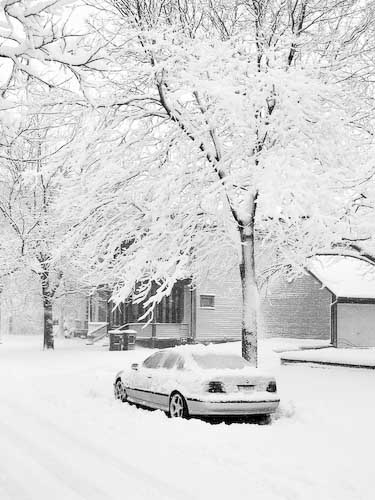
Even with snow tires, it was never a good car for snow and ice.  And salt?  I lived in constant fear (never realized) of corrosion.

The 540i stuck despite snow tires and shoveling

The 540i stuck despite snow tires and shoveling

The trouble was that I’d get serious about selling it, then I’d go out for “one last drive,” and suddenly all of my concerns would fade away.  I’d forget about its issues and costs, and I’d just love driving.  The big German V8 would growl, the six-speed manual would snick-snick from gear to gear, and the steering would be one with my hands.  The best analogy I can think of would be a flawed relationship, where the good times were so good that they made all of the many problems seem inconsequential by comparison.

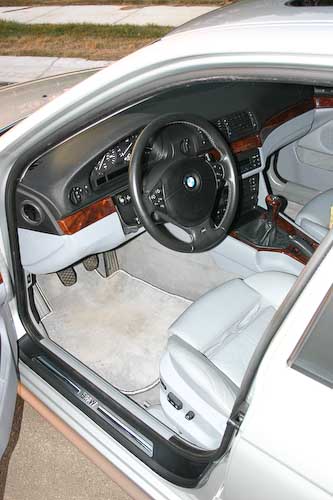
The BMWs interior

The BMW's interior

I drove that car more than any other I’ve owned.  In the 26 months it was my daily driver, I put 52,000 miles on it.  It was such a wonderful GT car.  Road trips, BMW-club driving school, around town… all fantastic.

When I finally did resolve to sell it, the right buyer took almost six months to materialize.  The good news is that I was able to sell what was a very special car to a true enthusiast.  He saw my ad in the local BMW club newsletter, drove hundreds of miles to Minneapolis from Sioux Falls, SD with a trailer to pick it up, and showed up at my door wearing a BMW t-shirt.

Why did I give it up?  I was heading off to grad school, and I knew there would be no way I could afford its upkeep while not gainfully employed.

My favorite car next to my favorite lake (Superior)

My favorite car next to my favorite lake (Superior)

It had its issues, yes, but the BMW has been the only car that I’ve been truly sad to see go.

Stats

  • Silver 1999 BMW 540i
  • 4.4 L naturally aspirated V8
  • 282 hp / 320 lb-ft
  • 6-speed manual transmission
  • Grey leather interior
  • 73,000 miles when acquired (September 29, 2004)
  • 125,000 miles when sold (August 6, 2007)


Car Number Three (of six)

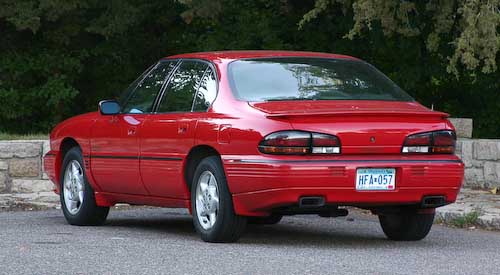
What do you do when your red Pontiac Bonneville gets totaled by a Chevy Avalanche?  If you’re me, you replace it with… another red Pontiac Bonneville; specifically, a 1995 Pontiac Bonneville SSE.

My 1995 Bonneville

My 1995 Bonneville

The new car looked so similar to the old car that several people commented to me, “Wow, they did an incredible job repairing your car!”  That would have been quite the trick, since I got the replacement a week after the collision, and the interior went from gray cloth to black leather.

I can appreciate a good prank...

I can appreciate a good prank...

Along the way, BonnevilleClub grew.  Users took it upon themselves to print calling cards promoting the site, plaster the URL on their car windows, make t-shirts, and organize meets.  They were the engine of the site; I was more of a benevolent, hands-off financier than a day-to-day manager.  That distance taught me the value of hiring good people and the importance of dealing with issues.  It also honed my server administration skills.  Overall, a very positive venture.

I sold my second Bonneville to a gentleman who was buying it for his daughter.  It took about a month to sell, and at the time, I thought that was unusually long.  Little did I know that my next car would need almost half a year to find a buyer.  But I’m getting ahead of myself.

Stats

  • Red 1995 Pontiac Bonneville SSE
  • 3.8 L naturally aspirated V6
  • 205 hp / 230 lb-ft
  • 4-speed automatic transmission
  • Black leather interior
  • 155,000 miles when acquired (ca. May 1, 2002)
  • 188,000 miles when sold (ca. November, 2004)


Car Number Two (of six)

I don’t think I appreciated how life-altering my first Bonneville would be.  It would be the car that would lead me to start one of my most successful projects thus far, BonnevilleClub (later sold, now defunct).  It almost never happened.

In the summer of 2001, I was still happily driving around in my Thunderbird.  My dad decided that it would be good if I had a newer vehicle, so he set about finding one.  The result: a first-generation Acura Legend sedan.  It was a nice car, one that would go on to give years of service in another role, but I didn’t see its benefits over the Thunderbird as offsetting its relatively significant cost.  Thus, it was rejected.

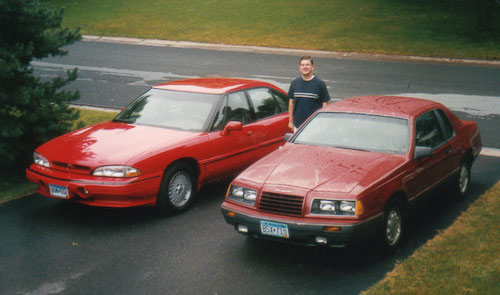
My dad’s second attempt was a red 1993 Pontiac Bonneville SSE.  Now that was a superior machine.  Television ads from the era suggest that it was GM’s answer to BMW: a luxury sports sedan.

Me with my 1993 Bonneville and my 1986 Thunderbird

Me with my 1993 Bonneville and my 1986 Thunderbird

About half a year after acquiring my Bonneville, I became frustrated by the dearth of quality information on the web pertaining to those vehicles.  Thus, I did what any good entrepreneur does when he sees an unmet need: I built a solution.  Modeled after ClubGP, BonnevilleClub came into being in early January 2002.  The only advertising I ever did for it was a couple of posts on rival car forums.  All of the subsequent growth was due to word-of-mouth and user-organized campaigns.

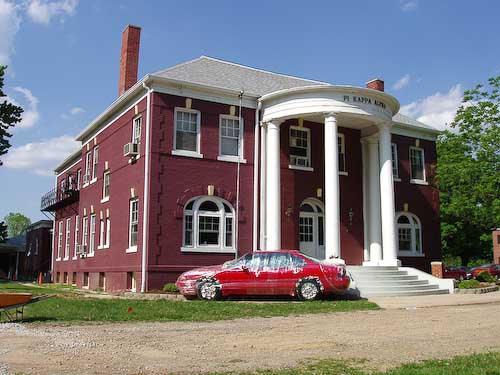
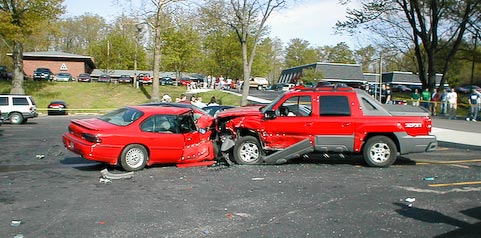
What I’ve failed to mention is that BonnevilleClub took years to gain significant traction.  And, like most successful companies, it experienced a nadir where its very existence was in jeopardy.  That time came in April 2002 when my car was crushed by a Chevy Avalanche while parked in a parking lot at Rose-Hulman.

My Bonneville, totaled by a Chevy Avalanche

My Bonneville, totaled by a Chevy Avalanche

My first Bonneville’s driving days were over.  That much was clear.  What wasn’t clear was what my next car would be.  Would BonnevilleClub die along with my Bonneville?

Stats

  • Red 1993 Pontiac Bonneville SSE
  • 3.8 L naturally aspirated V6
  • 170 hp / 225 lb-ft
  • 4-speed automatic transmission
  • Miles when acquired: 105,000 (ca. July 2001)
  • Miles when crushed: 115,000 (April 26, 2002)